
GHB (gamma-hydroxybutyrate) is a depressant: it slows down the central nervous system, including breathing and heart rate. It is usually a clear liquid with a salty or soapy taste. Its effect is often compared to alcohol, and the Trimbos Institute adds straight away that it is harder to dose and very addictive (DRUGSinfo, GHB).
People call it G, GHB or liquid ecstasy, although it has nothing to do with ecstasy. The body makes small amounts of GHB itself. That says nothing about the safety of a bottle bought at a party.
GHB, GBL and 1,4-butanediol
Three different liquids end up being called "G".
| Substance | What it is | What happens in the body |
|---|---|---|
| GHB | gamma-hydroxybutyrate, the drug itself | acts directly |
| GBL | gamma-butyrolactone, an industrial solvent and the main raw material for GHB | converted into GHB by lactonase enzymes in the blood |
| 1,4-butanediol (1,4-BD) | an industrial chemical | converted into GHB via alcohol dehydrogenase, the enzyme that also breaks down alcohol |
FRANK notes that GHB and GBL look identical, and that GBL is sold as a stain remover, paint stripper and superglue remover (FRANK, GHB and GBL). A forensic review describes both precursors as converted into GHB within about a minute after they reach the blood (Busardò and Jones 2015). The same pathway explains why 1,4-butanediol and alcohol compete for one enzyme, which is one more reason the combination is unpredictable (Felmlee et al. 2021).
GBL is more concentrated than GHB, so less of it gives the same effect, and Dutch monitoring describes its effects as stronger and therefore more dangerous (Nationale Drug Monitor). Undiluted GBL can also irritate and damage the throat and stomach (DRUGSinfo, GHB and GBL).
Why the same bottle can act so differently
GHB is known for a steep dose-response curve. On a steep curve, a small extra amount can tip someone from feeling relaxed into unconsciousness. A pharmacology review puts it this way: because of the steep concentration-effect curve, overdoses are common, with sedation, depressed breathing, coma and death (Felmlee et al. 2021).
Trimbos says the amount that gives a pleasant effect lies close to the amount at which someone loses consciousness (DRUGSinfo, risks). FRANK calls it "very easy to overdose" for the same reason. Several things make that small margin even smaller:
- Unknown strength. A liquid has no visible strength. FRANK says the strength of GHB and GBL varies from bottle to bottle, and Trimbos advises to always have GHB tested because its strength is not always the same.
- GBL sold as GHB. A bottle that holds GBL, or a mix, acts stronger and faster than plain GHB. A study in baboons found higher and earlier peaks of GHB in the blood after GBL and 1,4-butanediol than after GHB itself (Goodwin et al. 2009).
- Slow start. GHB starts to work after 5 to 30 minutes according to DRUGSinfo, and FRANK gives a range of 10 minutes to an hour. Someone who feels nothing yet may take more, and both amounts then act at the same time.
- The person and the moment. People react very differently to the same amount, and the effect can change from one night to the next (Nationale Drug Monitor).
- Anything else in the body. Alcohol, sleeping pills and other downers multiply the effect. That gets its own page: GHB with alcohol and other drugs.
This site gives no dose amounts. The honest answer to "how much is safe" is that nobody can tell from a bottle.
What the effects look like
Trimbos lists mental effects such as feeling relaxed, cheerful and talkative, fewer inhibitions, sleepiness and temporary memory loss. Physical effects include nausea and vomiting, dizziness, weak muscles, a slower heart rate and breathing, a lower body temperature, twitching in the arms, legs and face, and suddenly falling asleep (DRUGSinfo, effects). Most people are not sober three hours after use, so driving is off the table. The signs that matter most for the people around someone are the ones that point to the effect deepening: sudden sleepiness, slurred speech, confusion, vomiting and not responding when spoken to.
Going "out" means falling into a coma-like state. The person cannot be woken during that time, which can last hours, and they are very vulnerable. There is no antidote that reverses the effect of GHB (Busardò and Jones 2015). What helps in that moment is first aid and an ambulance: see someone is out.
How often it goes wrong in the Netherlands
The Trimbos Monitor Drugsincidenten collects reports from ambulances, first-aid posts at events and hospitals. In 2024, GHB was involved in 17% (1,040) of the 6,184 drug incidents recorded, about the same as in 2023. Most were intoxications (63%). Among serious intoxications after GHB alone, more than half (61%) involved reduced consciousness, and a low body temperature was common (Monitor Drugsincidenten 2024).
These figures only cover the services that take part in the monitor, so the real number of incidents is higher. Use among adults is low: 0.2% used GHB in the past year in 2025 according to the Nationale Drug Monitor.
Testing before anyone drinks
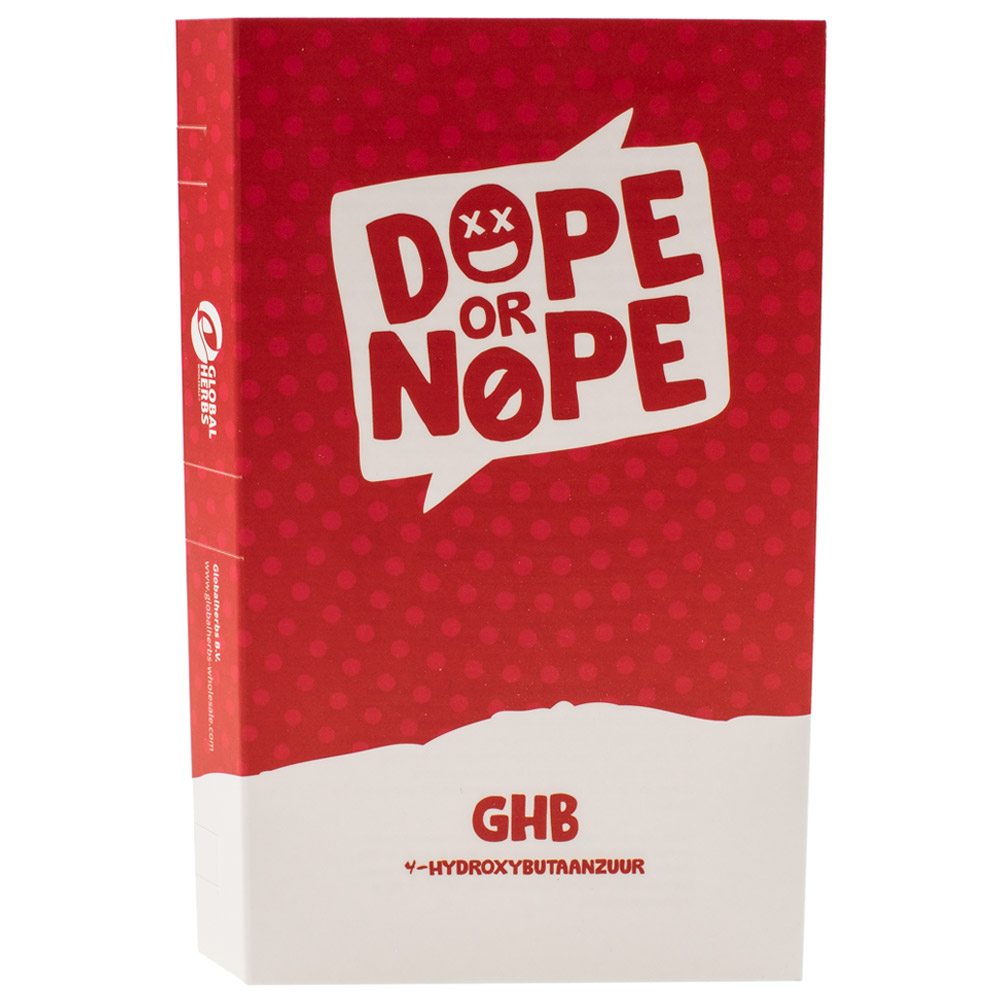
A reagent test cannot tell how strong a liquid is, but it does show whether GHB is probably in it at all. If the result does not match the chart, the bottle is not what it was said to be and goes away. Testing a liquid for GHB explains what a result can and cannot tell.
GHB is a controlled drug in the Netherlands and most other countries; see the law per country.