
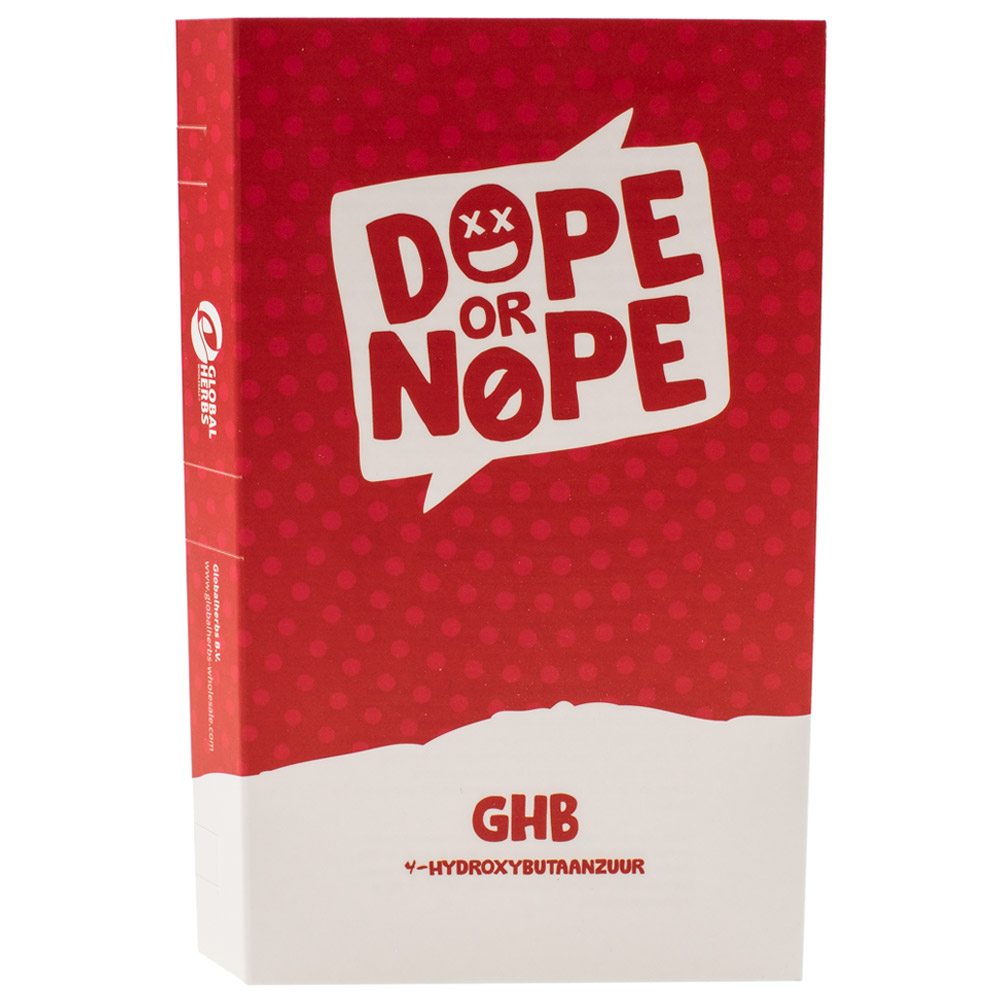
A GHB reagent test shows whether a liquid probably contains GHB. You add a small sample to a reagent, and the colour that appears is compared with the chart in the pack. The test is a check for identity: it cannot tell how strong the liquid is, and with GHB the strength is the dangerous unknown.
What a result tells you
| Result | What it means | What it does not mean |
|---|---|---|
| A colour that matches the chart | GHB is probably in the liquid | that the liquid is weak, pure or safe |
| No reaction, or a colour that is not on the chart | the liquid is not what the chart shows | that it is harmless; it may be GBL, a mix or something else entirely |
The brand behind the test is clear about the limits: it does not measure purity or dose, it does not see everything in a sample, and it does not make anything safe (Dope or Nope, GHB test). Two bottles that both test positive can differ a lot in strength.
Why strength stays unknown
FRANK notes that the strength of GHB and GBL varies from bottle to bottle (FRANK, GHB), and Trimbos advises to always have GHB tested because its strength is not always the same (DRUGSinfo). A colour test answers the first half of that advice, "is this GHB at all". The second half, "how strong is it", needs a lab.
In the Netherlands, the drug checking service DIMS of the Trimbos Institute tests drugs anonymously; samples often go to a lab, and the result takes about a week (DIMS, how testing works). Check with your local test location whether they accept GHB liquids.
GBL and the test
GBL and 1,4-butanediol turn into GHB inside the body, but in the bottle they are different chemicals. Neither the brand site nor the shop page says whether the GHB test reacts to GBL, and we could not find a source that does. So do not read a missing reaction as "this is GBL" or a matching colour as "this is not GBL". If the result does not match the chart, the liquid is not what you were told, and it goes away.
How to use it
Each pack holds one single-use test. You break an ampoule, add a sample, close it, and compare the colour with the chart printed in the pack. The ampoule contains a strong acid, so work on a stable surface, keep it away from your face and keep the test away from children. The six steps with pictures are on dopeornopetest.com, the site of the Dope or Nope brand. Use the amount of sample the leaflet asks for.
How many tests do you need
| Situation | Tests |
|---|---|
| One bottle | one test |
| Bottles from different sources, or two bottles that look the same | one test per bottle |
| A bottle that was refilled, mixed or left with someone else | a new test |
| A liquid of which nobody knows the origin | test it, and if the result does not match, throw it away |
Every liquid that has not been tested counts as unknown. A test from last weekend says nothing about a new bottle.
What a test cannot do
A test cannot make GHB safe to combine with alcohol, cannot predict how a person will react and cannot tell whether someone has been spiked. Someone who feels unwell after drinking needs people around them and possibly an ambulance, not a test kit. Those situations are on GHB with alcohol and other drugs, drink spiking and someone is out.
Where to get the test
Dutch-Smart, the smartshop that publishes this site, sells the Dope or Nope GHB test under the English name "Legit or Fake". The shop describes it as a quick colour test with the chart on the back of the pack. It ships from the Netherlands and sells to adults only. Dutch-Smart does not sell GHB or GBL.
View the GHB test at Dutch-Smart
GHB itself is a controlled drug in the Netherlands and most other countries: see the law per country.