Drink spiking means putting alcohol or drugs into someone's drink without their knowledge or consent (FRANK, spiking). If you or someone you are with suddenly feels far more drunk, sick or strange than the drinks can explain, get help from a friend you trust or from the venue staff straight away. If the person becomes very drowsy or cannot be woken, call 112 and follow someone is out.
Being spiked is never your fault.
How often is GHB involved
GHB is the drug most people think of first, and it does happen. Dutch monitoring of suspected cases among nightlife visitors found GHB the drug most often reported, while noting that spiking with GHB is not frequent (Nationale Drug Monitor). Trimbos adds that the studies that exist suggest spiking may happen less often than people think (DRUGSinfo, GHB in drinks).
Studies that tested people who believed they were spiked mostly found alcohol:
| Study | Who was tested | What was found |
|---|---|---|
| United Kingdom, 2000 to 2002 (Scott-Ham and Burton 2005) | 1,014 alleged drug-facilitated sexual assaults | alcohol in 46%; an undeclared sedative or disinhibiting drug in 2%, GHB among them |
| Australia (Quigley et al. 2009) | 101 emergency patients | no case of a sedative likely put into a drink at a pub or club; alcohol the most likely agent |
| Norway, Trondheim (Hagemann et al. 2013) | 264 sexual assault patients | none positive for GHB; alcohol the most common finding |
| Norway, Oslo (Dalaker et al. 2024) | 100 patients | unreported drugs in 15%; GHB in none |
One reason GHB shows up so rarely may be that it disappears from the body fast, so a late test misses it. That makes the speed of testing part of what to do.
Spiking also happens with ketamine, ecstasy or medicines, Trimbos' nightlife site notes, and extra alcohol in a drink counts as spiking too (Drugs & Uitgaan).
Signs to watch for
- feeling much more drunk than the drinks explain, or drunk after soft drinks
- sudden sleepiness, dizziness, nausea or vomiting
- confusion, trouble speaking or standing, gaps in memory
- seeing or feeling strange things, or being unusually wide awake
- loss of consciousness
These signs overlap with heavy drinking, which is why nobody should judge alone whether it is "just the alcohol". The person needs company and, if it gets worse, medical help.
What to do
- Tell someone now. A friend you trust, the bar staff or the first-aid post. In the UK many venues know the "Ask for Angela" code word (FRANK).
- Stay with people you know. Do not go home alone and do not leave with someone you just met.
- Call 112 if it gets worse, and follow the decision tree if the person stops responding.
- Get tested quickly. GHB leaves the body fast. Trimbos says it can be found in blood for about 4 to 5 hours and in urine for about 6 hours, so people who think they were spiked with GHB should collect urine quickly (DRUGSinfo, detection). A forensic review gives a detection window of 3 to 10 hours (Busardò and Jones 2015). Ask at the emergency department or your GP, and keep a urine sample in the fridge if you cannot go straight away (Drugs & Uitgaan).
- Report it. In the Netherlands, report it to the police, or call 112 in an emergency. In the UK, FRANK advises to call 101, or 999 in an emergency.
After sexual violence in the Netherlands, the Centrum Seksueel Geweld is reachable on 0800-0188.
The law
In the UK, the Ministry of Justice states that all forms of spiking are illegal. The Crime and Policing Act 2026 created a specific offence of administering a harmful substance, including by spiking, with a maximum of 10 years in prison (section 134). On 12 October 2026, legislation.gov.uk did not yet show that section as in force; spiking was already punishable under older offences. Germany banned trade in GBL and 1,4-butanediol in April 2026 partly because, in the words of its health ministry, these substances are used for rape and robbery. More on the law per country.
Testing a drink
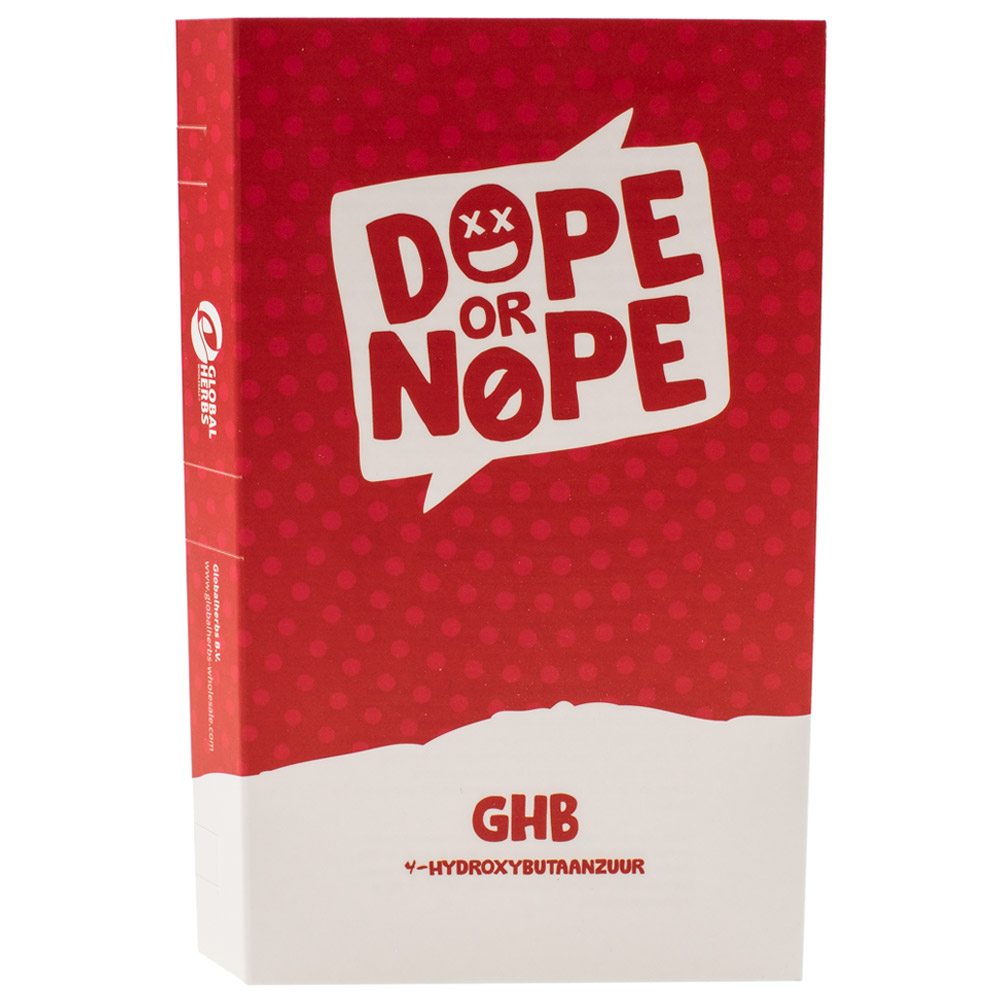
The Dope or Nope GHB test is made to check a sample of a liquid sold as GHB, before anyone takes it. Neither the brand nor the shop describes it as a test for mixed drinks, and it does not test a person: someone who feels spiked needs a urine or blood test at a hospital or GP. What a GHB reagent test can and cannot tell is on testing a liquid.